Blog
Composite vs. Cedar vs. Ipe: What the Right Choice Actually Depends On
Author
Alex Kaluta
Published
Category
Guides
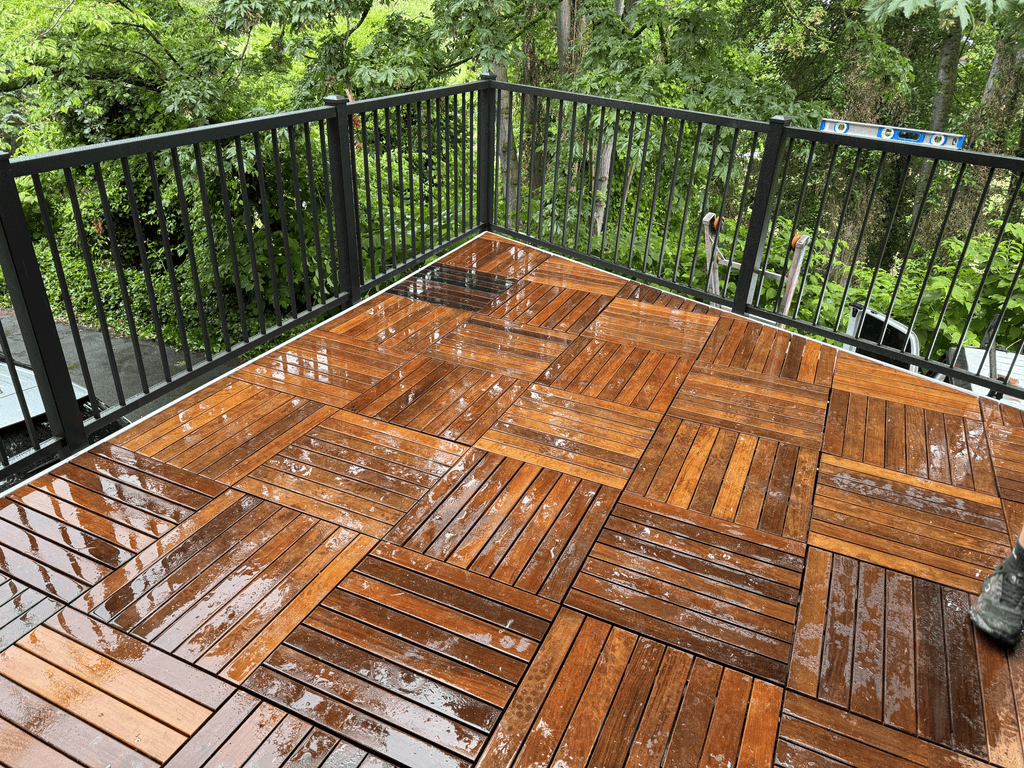
Standing in a showroom or scrolling material options online and not sure what to pick? This guide breaks down the real differences without the sales pitch.
The Three Most Common Decking Materials in Seattle
When Seattle homeowners start planning a new deck, the material question comes up almost immediately. Composite, cedar, and hardwood are the three categories we work in most often, and they serve very different homeowners for very different reasons.
Here's how to think about each one honestly.
Composite Decking
What it is: Engineered boards made from wood fiber or bamboo combined with plastic polymers, capped with a protective outer layer.
Who it's right for: Homeowners who want low maintenance above everything else. No staining, no sealing, no annual treatment. Wash it once or twice a year and it performs identically in year fifteen as it did in year one.
The tradeoff: Composite doesn't feel or look exactly like natural wood. The texture is engineered to mimic grain but it's consistent in a way natural wood isn't. Some homeowners love this. Others find it reads as artificial.
Our recommendation for Seattle: MoistureShield or TimberTech. Both perform exceptionally in Pacific Northwest moisture conditions. MoistureShield is specifically engineered for high-moisture environments and is our first recommendation for pool decks and covered applications.
Western Red Cedar
What it is: Naturally rot-resistant softwood grown throughout the Pacific Northwest. Contains natural oils that provide inherent moisture and insect resistance without chemical treatment.
Who it's right for: Homeowners who want genuine natural wood and are willing to maintain it. Cedar requires sealing or staining every two to three years to perform at its rated lifespan.
The tradeoff: Maintenance is real. An unmaintained cedar deck in Seattle's climate will start showing significant surface degradation within five to eight years. Properly maintained, it can last thirty to forty years and look better over time.
Our recommendation: Kiln-dried cedar sourced for tight grain. The extra cost on the material side pays back in dimensional stability and fewer surface issues as the deck ages.
Hardwood: Ipe and Batu
What it is: Tropical hardwood with natural density that resists moisture, insects, and surface wear without any treatment.
Who it's right for: Homeowners making a long-term investment and who appreciate the aesthetics of real hardwood. Ipe specifically is the most durable decking material available for residential installation, period.
The tradeoff: Cost is significantly higher than cedar or composite. Installation requires more care, specifically pre-drilling and stainless fasteners. But the lifespan, 40 to 75 years for Ipe, makes it the most cost-effective material over the full life of the deck.
Our recommendation: Ipe if budget allows. Batu if you want hardwood performance at a more accessible price point. Both deliver what natural wood enthusiasts are looking for.
How to Decide
Ask yourself these three questions:
How much time do you want to spend maintaining it?
Zero maintenance points to composite. Some maintenance is fine points to cedar or hardwood.
How long do you plan to be in the home?
Short to medium term, composite or cedar. Long term or generational, Ipe.
What's the primary use?
Pool deck or high-moisture application, MoistureShield composite. Heavy traffic or pets, Eva-Last composite or Ipe. Aesthetics above all, cedar or Ipe.
We're happy to walk through this in person at your site. Contact us at (425) 600-2051.
Author
Alex Kaluta
Alex is the steadiest voice on any job site. Whether he's managing three projects at once or walking a homeowner through a tough repair call, he brings clarity and craft to everything he touches.
What’s better than insider perks, pro tips, and surprises?
Sign up to get the most recent blog articles in your email every week.
Other Blogs