Blog
5 Signs Your Deck Won't Survive Another Seattle Winter
Author
Alex Kaluta
Published
Category
Tips
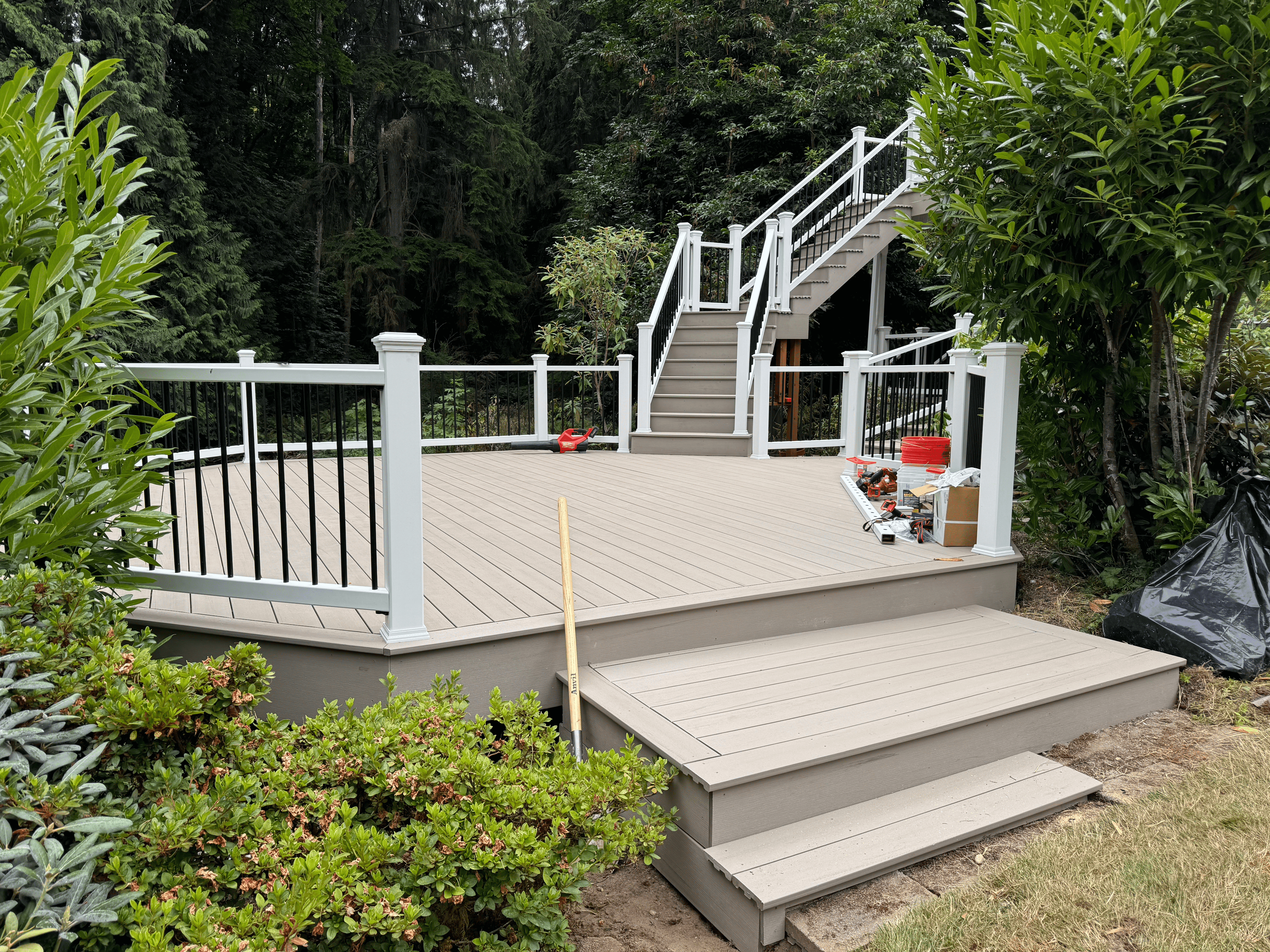
Decks aren't cheap, but with the right attention they last far longer than most homeowners expect. Here are five warning signs your deck is in trouble before winter makes it worse.
Is Your Deck Ready for Another Seattle Winter?
Seattle winters don't announce themselves. One week it's dry, the next your deck has been sitting under standing water for three days straight. By the time you notice something's wrong, the damage is usually already done underneath.
The good news is your deck gives you signals before it fails. Here are five to look for before the rain arrives.
1. Soft or Spongy Boards Underfoot
Walk your deck slowly and pay attention to how the boards feel. Any give, flex, or soft spots underfoot are a sign of moisture damage in the decking boards or the joists below them. This isn't cosmetic. Soft boards mean rot, and rot spreads.
If one board feels wrong, the ones next to it are likely in the same condition. Don't wait on this one.
2. Visible Graying or Surface Checking
Surface checking is the small cracks that run along the grain of wood boards as the surface dries and contracts. Some checking is normal on older wood decks. Heavy checking across multiple boards means the surface has lost its ability to repel water and is absorbing moisture with every rain cycle.
Gray, weathered boards without any surface protection are doing the same thing. The color change is cosmetic. The moisture absorption behind it is structural.
3. Loose or Wobbly Railing
Give your railing a firm push. Any movement means the post connection has loosened, rotted, or was never properly anchored in the first place. A railing that moves is a code violation and a safety hazard. In Seattle, one wet winter can turn a borderline connection into a failed one.
This is one of the easier repairs on a deck. It becomes expensive when it's ignored.
4. Rust Stains Around Fasteners
Dark rust-colored streaking around deck screws or nails means the fasteners are corroding. Corroding fasteners lose their holding strength over time. They also accelerate wood rot around the fastener hole by trapping moisture.
On a deck that's more than 10 years old, widespread fastener corrosion is often a sign that resurfacing is the right next step.
5. Visible Rot at the Ledger Board
The ledger board is where your deck connects to the house. It's the most critical structural connection on the entire deck and the most vulnerable to moisture damage. Lift the deck boards nearest the house and look at the ledger. Any softness, discoloration, or visible rot here is a serious structural concern that needs to be addressed before winter loads the deck with water weight.
A failed ledger doesn't just mean a damaged deck. It means the deck can pull away from the house entirely.
What to Do
If you're seeing one or more of these signs, the right move is a structural inspection before the rain season hits. We inspect decks across the Seattle metro and give you a straight assessment of what needs attention and what can wait.
Contact us at (425) 600-2051 or fill out the form on our contact page.
Author
Alex Kaluta
Alex is the steadiest voice on any job site. Whether he's managing three projects at once or walking a homeowner through a tough repair call, he brings clarity and craft to everything he touches.
What’s better than insider perks, pro tips, and surprises?
Sign up to get the most recent blog articles in your email every week.
Other Blogs